

View this edition in our enhanced digital edition format with supporting visual insight and information.
In this week’s edition of FFI Practitioner, Jay Hughes, Mary Duke, and Stacy Allred offer the first in their series of Reflections on Family Flourishing, a companion to their upcoming new book. The authors explore how decision-making processes shape the social capital of enterprising families. Drawing on lessons from Japanese governance traditions, they offer a practical model that places listening before authority and inclusion before conclusion.
As families navigate increasing complexity across generations, the discipline of thoughtful dialogue becomes not simply a courtesy but a strategic advantage. This article invites practitioners to consider how structured listening, elder restraint, and consensus-building can strengthen both family unity and long-term adaptability.
The wise never stop listening, for every person has a story that can teach us.
—Traditional Zen teaching
Years ago, while studying how families govern themselves, an exemplar Japanese family invited Jay to help refine their approach to family governance. What he learned from that experience reshaped his thinking and is now embedded in how we guide families as they design their own decision-making processes.
At its core, good governance is simply good decision-making. Good decision-making—fair, transparent, and timely—forms the bedrock of a family’s social capital.
Rooted in Confucian tradition, Japanese culture places deep value on structural hierarchy, where elders and teachers, or sensei, are honored for the wisdom that comes with experience. In business, this respect is reflected in the ringi system: a bottom-up process in which proposals circulate across levels to build understanding and buy-in before approval.1 While this approach can take longer than the more familiar Western top-down model, it often leads to highly committed, consensus-based decisions.2
In families, this cultural respect for experience can be harnessed through a simple but powerful practice: when an issue is discussed, each family member speaks in order of birth, from youngest to oldest.
This order matters. Every voice is heard, and the eldest—the family’s guiding voice—hears the full range of perspectives before offering their own. Younger voices bring fresh experiences and emerging concerns; older members contribute context, memory, and continuity. Together, they reveal the family’s culture in action.
While this approach may feel unfamiliar to some Western readers, it is not without precedent. George Washington used a similar method in cabinet deliberations, listening to all views before stating his own, mindful of the precedents he was setting.3 Abraham Lincoln did much the same with his “team of rivals.”4 Edmund Burke articulated a related principle, arguing that leadership should decide as lightly as possible, binding the future no more than necessary.5 Each understood the weight of authority—and deliberately restrained it to allow better judgment to emerge.
Skeptics might ask, “Don’t family members simply tailor their remarks to what they think the elder wants to hear?” Perhaps. But this is more than a procedural shift; it is an intentional invitation to hear differing opinions. It requires slowing the process with patience and care to ensure participation and that the elder’s eventual decision emerges from a spectrum of views rather than a single voice.
It is also an invitation to practice what Otto Scharmer calls generative listening: an open mind (suspending judgment), an open heart (cultivating empathy), and an open will (letting go and letting come).6 Such listening enables families to sense and enact emerging possibilities.
In our experience, the result is often a decision that reflects consensus, minimizes unintended consequences, and preserves flexibility as circumstances evolve. As the Japanese proverb suggests, “The bamboo that bends is stronger than the oak that resists.”7
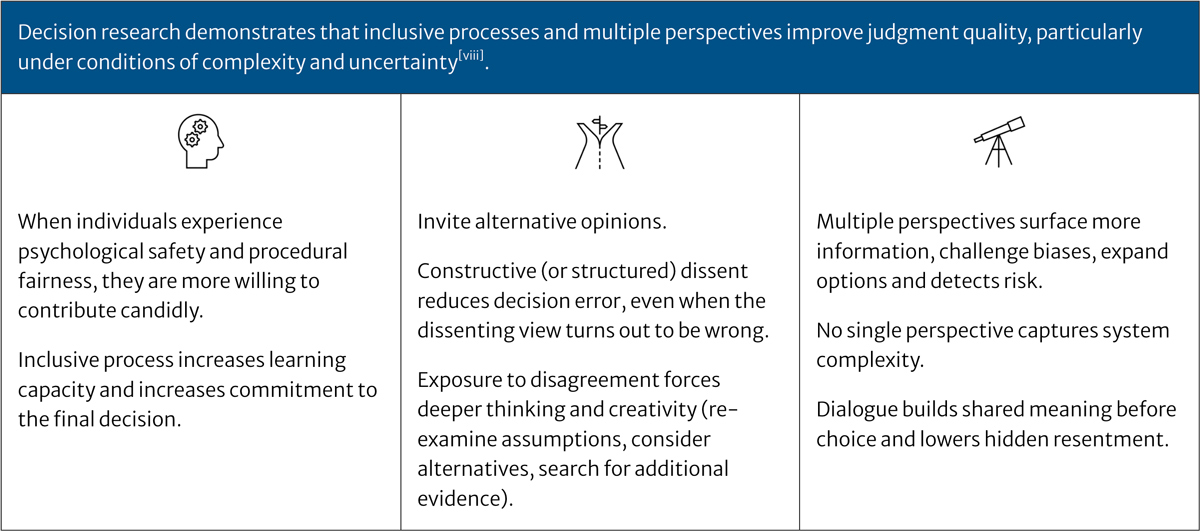
Research supports this approach. Decision science demonstrates that inclusive processes and multiple perspectives improve judgment quality, particularly under conditions of complexity and uncertainty.8 When individuals experience psychological safety and procedural fairness, they are more willing to contribute candidly. Inclusive processes increase learning capacity and commitment to final decisions. Structured dissent reduces decision error—even when the dissenting view proves incorrect—because disagreement prompts deeper thinking, challenges assumptions, surfaces risk, and expands options. No single perspective captures system complexity; dialogue builds shared meaning before choice and lowers hidden resentment.
Context matters in family decision-making. Some decisions are routine and can be streamlined for efficiency. However, when choices have lasting impact or touch on family values, a more thoughtful, inclusive approach—such as this Japanese model—ensures all voices are heard and consensus is built. Adapting process to significance allows families to balance speed with wisdom.
In the end, this model highlights a quiet paradox: an elder’s authority is strongest when exercised with restraint—rooted in listening, informed by all voices, and guided by respect for the family as a whole.
We invite readers to reflect on these questions:
- Invite all voices: Are all voices in our family truly heard before decisions are made, especially those of younger members?
- Listen and reflect: Do elders practice restraint and listen fully before offering their views?
- Create inclusion and buy-in: How do we ensure our process builds commitment rather than merely following authority?
- Build dialogue habits: What traditions encourage thoughtful, orderly dialogue in family governance?
- Evaluate and enrich: How might we adapt our approach to foster greater transparency, respect, and unity?
- Apply: What might change if we approached our next important decision using this model?
References
1 James C. Abegglen and George Stalk Jr., Kaisha: The Japanese Corporation (New York: Basic Books, 1984).
2 The informal consensus-building process in Japanese culture, nemawashi, differs from the formal ringi system. Cultural norms of deference and harmony contribute significantly to its effectiveness. See James (Jim) Grubman and Dennis T. Jaffe, Cross Cultures: How Global Families Negotiate Change Across Generations (CreateSpace Independent Publishing, 2016).
3 Joseph J. Ellis, His Excellency: George Washington (New York: Alfred A. Knopf, 2004).
4 Doris Kearns Goodwin, Team of Rivals (New York: Simon & Schuster, 2013).
5Edmund Burke, A Philosophical Enquiry into the Origins of the Sublime and Beautiful, ed. David Womersley (London: Penguin Classics, 1999).
6 C. Otto Scharmer and Katrin Kaufer, Presencing: 7 Practices for Transforming Self, Society, and Business (San Francisco: Berrett-Koehler, 2025).
7 David Galef, Japanese Proverbs: Wit and Wisdom (2009).
8 Scott E. Page, The Difference (2007); Daniel Kahneman, Thinking, Fast and Slow (2011); Amy C. Edmondson, “Psychological Safety and Learning Behavior in Work Teams,” Administrative Science Quarterly 44, no. 2 (1999).
About the Contributors

James “Jay” E. Hughes, Jr. has devoted his career to serving families seeking to discover and fulfill their purpose. Through his landmark work on the Five Capitals, Jay helped reshape the global conversation about wealth, advancing a broader understanding of holistic well-being across generations. He continues to advise families and family office leaders worldwide and serves as a guiding voice in the evolving field of family wealth.
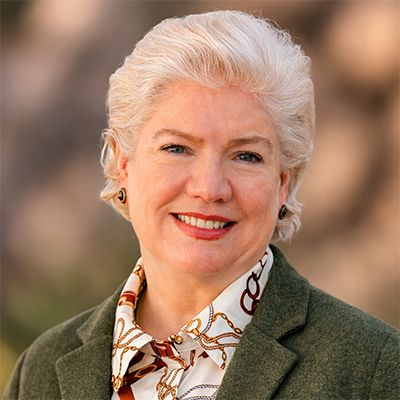
Mary Duke works with families to strengthen relationships, deepen trust, and accelerate meaningful results across the family system. With deep experience in fiduciary service and family enterprise leadership, she serves as trustee and director for select family enterprises and private trust companies. She also designs governance and learning systems that translate intention into lived experience. Her work with families around the world informs a global perspective and cultural sensitivity.
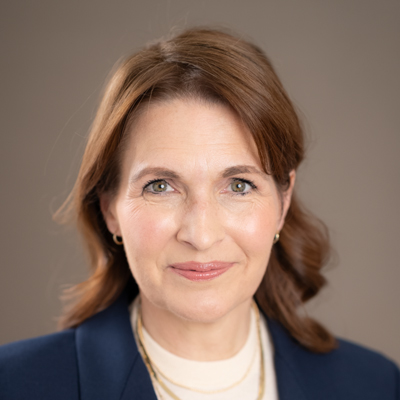
Stacy Allred serves as Managing Director and Head of Family Engagement and Governance at J.P. Morgan Wealth Management. Over the course of her career, she has helped multigenerational families build the skills, structures, and confidence needed to navigate wealth wisely. Stacy’s work sits at the intersection of practical governance and creating a learning family, grounded in the belief that enduring wealth depends on the ongoing and creative pursuit of moving towards potential. Her views are her own and do not necessarily reflect the views of JPMorganChase.
View this edition in our enhanced digital edition format with supporting visual insight and information.