
View this edition in our enhanced digital edition format with supporting visual insight and information.
In the fourth article in a series from FFI Virtual Study Groups, contributors examine how context shapes the practice of advising family enterprises in Latin America. Drawing on both research and field experience, the authors explore how cultural norms, economic constraints, and legal frameworks interact to influence governance and succession.
Advisors in North America and Europe typically enter their work within frameworks shaped by institutional stability, developed capital markets, and relatively predictable governance environments. When applied to family firms in the Latin American context, however, these assumptions often fall short. This creates a gap for advisors working in or with families from the region. Success depends not only on technical expertise but also on contextual sensitivity—the ability to understand how culture, economics, and legal frameworks interact to shape business family behavior.
This article reflects part of our experience advising and researching family enterprises across Latin American countries. Rather than offering universal claims, we propose two lenses for understanding this context: cultural patterns within families and organizations, and economic realities shaping continuity—reinforced by legal frameworks governing inheritance. Together, these dimensions influence how succession and governance unfold.
Culture as a System: The Logic of Honor
Jaffe and Grubman’s framework distinguishes three cultural orientations: individualism, harmony, and honor. While all can coexist in varying combinations within the same family system, Latin American family firms are best understood through a culture of honor.
In honor-based cultures, identity is relational and tied to reputation, loyalty, and social recognition. The family functions as both a private and public institution, and its standing matters. Decisions are evaluated not only economically but also in terms of their impact on dignity, legacy, and collective identity.
This logic shapes behavior. Loyalty and belonging are highly valued, and perceived disloyalty carries significant weight. Conflict is not absent, but it is managed carefully, as open confrontation may threaten both cohesion and reputation. Behaviors often described as “harmony-oriented”—such as indirect communication or conflict avoidance—are better understood as expressions of this honor-based logic.
The implications for succession are profound. Leadership transitions are not merely organizational events; they are symbolic moments that redefine status, recognition, and identity. Decisions about who leads, who steps aside, and how roles evolve are deeply consequential.
For practitioners, what may appear as delay or ambiguity is often a deliberate effort to protect honor while preserving unity.
The Family System: Proximity, Care, and Emotional Infrastructure
These cultural dynamics become clearer in everyday family life. In many Latin American contexts, the family is both emotional and spatially embedded. Physical proximity remains important. Multiple generations often live nearby, interact frequently, and maintain strong daily connections. Regular gatherings are not merely symbolic—they sustain cohesion and transmit values.
This reinforces a collective identity. The family operates as a system with expectations of loyalty, presence, and mutual support.
Within this system, women—especially mothers and grandmothers—often play a central role. While formal authority may appear patriarchal, relational authority frequently resides elsewhere. Women act as custodians of relationships, mediators of conflict, and carriers of family values and meaning.
Family responses to illness and vulnerability further illustrate this dynamic. Care is typically collective, presence is expected, and emotional support is mobilized quickly. These patterns extend into business relationships and succession processes.
Together, these elements form an emotional infrastructure—a relational capacity often associated with long-term family enterprise continuity (Lansberg and Perrow).
Yet this strength has trade-offs. An emphasis on cohesion can limit open conflict resolution. Roles may blur, accountability may weaken, and decision-making can become ambiguous.
At the same time, these families are evolving. Younger generations are more global, more mobile, and increasingly exposed to individualistic cultures, as many Latin American business families have sent next-generation leaders to study in Western countries over the past decades.
This has led to a blending process that Jaffe and Grubman describe as the emergence of a “fourth culture.” As a result, authority is becoming less centralized, and family structures are growing more complex. Advisors must therefore understand both the continuity and the transformation of these systems.
Economic Context: Continuity as a Structural Necessity
If culture shapes relationships, economics defines options. In developed markets, selling a business is a viable path. Although the past two decades have seen a significant increase in private equity investment in parts of the region, in much of Latin America selling the business remains limited or often unfeasible. Capital markets are smaller, liquidity is constrained, and buyers are fewer. As a result, the family firm frequently becomes the primary vehicle for preserving wealth.
Continuity is not always a choice—it is often a necessity. Even though many advisors work primarily with large and complex family enterprise systems, it is important to recognize that much of the region’s business landscape is rooted in firms that originated as small, informal, and relatively young enterprises, many founded within the past three decades. These firms have evolved—some into large and diversified groups—but they often retain structural and cultural imprints from their formative stages.
As a result, many family enterprises in the region continue to exhibit founder-influenced dynamics, concentrated decision-making, and varying degrees of institutional development. This broader context reinforces both the centrality of the family and the challenges associated with building long-term continuity.
This reframes succession:
- The question is often not whether to continue, but how
- The next generation is not optional—it is often required
- Governance focuses not only on efficiency but on sustaining continuity
Economic volatility—political shifts, inflation, and regulatory uncertainty—further shapes behavior. Families develop high levels of adaptability and resilience—a defining characteristic of firms operating in volatile environments (Khanna and Palepu)—relying more on internal trust than external institutions.
This is both a strength and a constraint. It can delay formalization, reduce documentation, and create resistance to governance structures, particularly in first- and second-generation firms transitioning away from founder-centric models.
The Legal Layer: Inheritance, Constraint, and Continuity
Legal frameworks add another layer of complexity. In common law systems, families have greater flexibility in transferring ownership. In much of Latin America, however, the Roman civil law tradition includes forced heirship (legítima), which limits how assets can be distributed.
This leads to:
- Greater ownership dispersion
- Reduced testamentary flexibility
- Increased need for alignment
Without planning, assets may be distributed equally regardless of capability or involvement.
At the same time, many firms face a valuation and liquidity trap: they are large relative to their markets but difficult to sell. This reinforces a “no-exit” reality, where families retain ownership even under strain.
In response, wealthy families often develop multijurisdictional structures for both efficiency and protection against systemic risk.
In this context, governance cannot rely on market mechanisms alone. It must be built on alignment, communication, and intentional design.
Where Culture and Context Meet: Succession as a Systemic Process
When culture, economics, and law converge, succession becomes a systemic process. It involves:
- Preserving cohesion (honor-based relational dynamics)
- Developing relational capacity to reduce conflict
- Protecting identity and legacy
- Ensuring continuity under constraint
- Managing ownership within legal limits
Succession is therefore deeply relational. Families rely on their emotional infrastructure—communication, tolerance, and care—to navigate transitions.
This helps explain common patterns:
- Gradual, extended transitions
- Broad family involvement
- Blurred boundaries between roles
- Reliance on trust alongside formal structures
From the outside, this may appear inefficient. From within, it is often adaptive.
An often-overlooked role in this system is what Poza and Messer describe as the “Invisible Architect”—frequently the founder’s spouse. In many Latin American families, this individual sustains trust, mediates tensions, and stabilizes the system during succession. Ignoring this role means overlooking a critical lever of cohesion.
Implications for Practitioners
Three principles emerge:
- Context Before Framework
Do not assume liquidity or exit options. Focus on continuity and multigenerational sustainability. - Work with the Family System, Not Around It
Relational dynamics are central. Engage key actors—including those without formal authority. - Build on Resilience, Don’t Replace It
Introduce governance structures that strengthen adaptive capacity rather than constrain it.
Final Reflection
Latin American business families operate at the intersection of strong relational cultures and constrained economic environments. Succession is not merely a technical transition—it is a lived process integrating family, business, and ownership.
Understanding this context is not about stereotypes but about contextual sensitivity: recognizing how culture, economics, and law shape behavior. Viewed through this lens, continuity can be supported not as an abstract concept but as a practical and deeply human endeavor.
References
Jaffe, Dennis, and James Grubman. Cross Cultures: How Global Families Negotiate Change Across Generations. Family Wealth Consulting, 2016.
Jaffe, Dennis, and James Grubman. “Fourth Culture Rising.” STEP Journal, July 2019, 62–63.
Khanna, Tarun, and Krishna Palepu. Winning in Emerging Markets. Harvard Business Press, 2010.
Poza, Ernesto J., and Tracey Messer. “Spousal Leadership and Continuity in the Family Firm.” Family Business Review 14, no. 1 (2001): 25–36.
Lansberg, Ivan, and Edith Perrow. “Understanding and Working with Leading Family Businesses in Latin America.” Family Business Review 4, no. 2 (1991): 127–147.
About the Contributors

Guillermo Salazar, FFI Fellow, is founder of Exaudi Family Business Consulting. He is an expert on family governance, strategic succession planning, generational transition, and conflict resolution. A founding member of the FFI Iberoamérica VSG and chair of the 2019 Global Conference Program Committee, he received the 2015 FFI International Award and previously served on both the FFI Board of Directors and the GEN Faculty. He can be reached at guillermo.salazar@exaudionline.com.
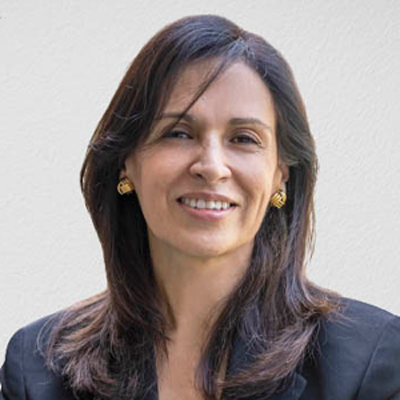
Luccia Reynoso is co-founder of VALORES Family Business Consulting and FGI Family Governance Index. She is an expert in family governance, ownership succession planning, wealth management, and transgenerational entrepreneurship. She serves on the boards of family businesses and is a founding member of the ILAFEP – Institute of Peruvian Family Businesses, where she currently chairs the Board. She can be reached at luccia.reynoso@vcef.com.pe.
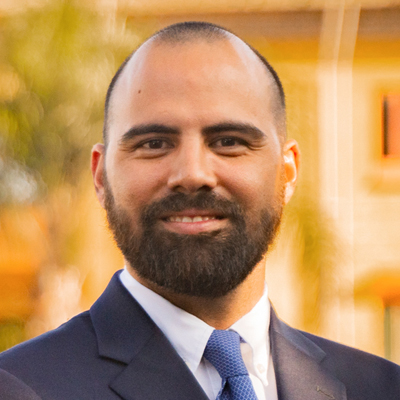
Rafael Wong is President of the Ecuadorian Association of Family Businesses and Executive Director of FBN Ecuador. A specialist in family governance and succession, he serves as a board member for several family enterprises and non-profit organizations. He is a 3G and Family Council member of a major agro-industrial group in Ecuador. An active member of the FFI Iberoamérica VSG, his work aligns family ownership with strengthening the impact of family enterprises in society. He can be reached at rafaelwong@fbnecuador.org.
View this edition in our enhanced digital edition format with supporting visual insight and information.