
View this edition in our enhanced digital edition format with supporting visual insight and information.
What does prudent investing mean when a trust’s horizon spans generations? In the fourth article in our 2026 series from FFI Fellow James E. Hughes, Jr., and Keith Whitaker, the authors distinguish wealth creation from wealth regeneration. They explore how a trust’s purpose can guide investment policy and consider the roles of patience, liquidity, and relationships with beneficiaries in sustaining capital across generations.
Most investors hope to grow their financial capital into financial “wealth.” Families who already have significant wealth face a fundamentally different challenge. Their problem is not wealth creation but wealth regeneration.1
Wealth regeneration is not just preservation. Mathematically, regeneration requires generating a net real return that consistently exceeds the aggregate drag of inflation, taxes, personal spending, and administrative costs over generations. The goal is to maintain the fortune’s purchasing power for future generations. It is a difficult goal to achieve, which makes seeing clearly the special characteristics of this task even more important.2
Families possessing substantial capital enjoy an important advantage. In most cases, creating a fortune requires materializing financial value out of a dream and then compounding that initial value at a high rate over a long period of time. Stewarding an existing fortune can be done well without a similar act of creation and without that exceptional rate of return. Also, existing capital provides opportunities unavailable to those trying to build an initial fortune. Properly stewarded, accumulated capital becomes the foundation from which future capital can be regenerated.
There may also be a second advantage hiding in plain sight—one that is often mistaken for a disadvantage. By the third generation, most significant family wealth is no longer owned outright by family members but held in trust.3 Trusts may appear to contribute to financial entropy, as they are associated with broad diversification, fiduciary constraints, administrative expense, tax complexity, and the risk of beneficiary dependency. However, the trust, properly understood, may be one of the principal institutional reasons why significant financial capital can be regenerated across generations. The very fiduciary disciplines that can produce entropy may instead provide the conditions under which regeneration becomes sustainable rather than accidental.
This conclusion demands rethinking the meaning of prudent investing in the fiduciary context. The traditional formulation urges trustees to invest as prudent businesspeople invest.4 The value of that guidance has endured, but it may also reflect an assumption that trustees are trying to do what ordinary investors are trying to do. In many cases, they are not. Most investors seek their own financial advantage, such as a comfortable retirement. Trustees seek to steward capital belonging beneficially to others so that it continues fulfilling the purposes for which it was entrusted. Following ordinary investors without recognizing this distinction may therefore be imprudent precisely because the fiduciary objective is fundamentally different. For large, multigenerational trusts, sophisticated institutional investors may provide a closer comparison than ordinary individual investors. Yet even institutional practice is no substitute for fiduciary judgment: the trustee must still determine what prudence requires for this trust and its purposes.
Trust investment policy must derive from fiduciary purpose rather than conventional investment practice. Dynamic wealth regeneration becomes the practical expression of that purpose, while prudence becomes the governing virtue that makes regeneration possible.
The discussion that follows develops this philosophy. It begins with the purpose of financial capital held in trust, considers prudence as the defining fiduciary virtue, and then examines the practical implications of investing for long-term wealth regeneration. Our thesis springs from this distinction: founders create wealth; trustees regenerate it.
The Purpose of Financial Capital Held in Trust
Whether established during life or at death, every trust reflects someone’s judgment that assets should be held, managed, and distributed by a trustee rather than transferred outright to beneficiaries. That decision is rarely made for financial reasons alone. The settlor seeks to accomplish something through the trust—to protect vulnerable beneficiaries, encourage responsible lives, preserve opportunities for future generations, support charitable purposes, sustain a family enterprise, or achieve some combination of these objectives.
Capital exists to serve those purposes.
Investment discussions naturally focus on markets, asset classes, expected returns, and risk. Yet none of these discussions can lead to intelligent outcomes until the trustee understands what the trust is trying to accomplish. Investment policy is not autonomous. It follows from purpose.
The trustee’s duty to invest does not arise merely because investing usually produces higher returns than holding cash. Rather, it arises because trustees have a duty to make trust property productive in carrying out the settlor’s intent.5 Few settlors create trusts with the expectation that trustees will allow assets to lie dormant. To preserve capital without putting it to productive use would ordinarily frustrate the very purposes for which the trust was established.
Understanding the purpose of the trust also changes the way investment success should be measured. Individual investors commonly evaluate success in terms of absolute returns or relative performance against market benchmarks. These measures have their place. They may help the trustee evaluate an investment manager or indicate whether a portfolio is performing as expected. But they are not the trustee’s ultimate standard of success.
Returns matter because purposes matter. The trustee’s obligation extends beyond preserving today’s benefits. The trustee must steward capital so that it can continue serving beneficiaries who may not be born for decades. This long-term focus derives directly from the settlor’s likely intent that significant trust assets will benefit generations of his or her family to come. This purpose creates a very different perspective from that of most individual investors.
For example, it encourages trustees to look upon trust investments (even and especially equity investments) as instances of debt. This is not as outlandish as it may sound. Every investment is a debit on the trustee’s balance sheet, since the trustee is personally responsible for it. The primary question a trustee must ask about any investment is, “When can the trust get its money back?”
Purpose is not only a moral constraint on trustees. It is one of the reasons trusts can regenerate wealth across generations. Because investment remains anchored to enduring purposes rather than the changing preferences of successive beneficiaries (preferences that change even within an individual beneficiary’s life), the trust possesses a continuity absent in ordinary ownership. In addition, if trust assets are not being dissipated due to demographic growth (a real possibility as many families shrink in size), then already huge fortunes may persist to benefit a small number of beneficiaries. In such cases, trustees have a duty to reflect even more on the purpose of the trust and the question of what constitutes true wealth for beneficiaries 100 years or more in the future.
Prudence: The Governing Fiduciary Virtue
The duty to follow the settlor’s intent explains why trustees invest; the duty of prudence governs how they invest.
Prudence is far more than a legal compliance requirement resting on process. Process provides a legal safe harbor, but it only documents judgment—it does not create it.6 At its core, fiduciary prudence is the operational discipline of maintaining intergenerational equity: balancing the financial needs of current beneficiaries against the real purchasing power required by future generations.
Trustees routinely confront circumstances that no formula can resolve. Beneficiaries differ in age, needs, maturity, and resources; trusts differ in duration, liquidity constraints, and tax characteristics. Prudence is the practical wisdom required to weigh these competing factors. It ensures that capital is neither exposed to existential loss in pursuit of excess return nor rendered dormant under the guise of conservatism. That said, prudence suggests that more trusts fail to reach their goals through entropy—that is, through taking too little risk rather than taking on too much. Prudence does not prescribe any particular investment style, strategy, or instrument. It does, however, require attention to price, since the price paid affects both prospective return and the risk of permanent impairment.
For trustees of large, multigenerational trusts, prudence also requires seeing these traditional investment factors differently than most investors. Trustees need to understand the measurement of portfolio volatility, for example, to know whether they are being paid for risk incurred. However, for trustees of multigenerational trusts, volatility is an opportunity. As a result, the trustee in this case must steward the trust’s balance sheet to take advantage of a situation in which they have a competitive advantage over investors who may be hindered by a need for funds. Also, such trustees need to consider prudently risks that differ from those faced by traditional investors, such as permanent loss of intergenerational wealth through leverage, institutional failure, regime change, and expropriation. In these cases, a trustee’s portfolio may look “risky” from a traditional perspective while, in fact, being quite prudent.
Put simply, prudence may dictate a traditional 60/40 equity/fixed-income allocation for an individual investor; the same allocation is likely imprudent for a trust with a century-plus time horizon. Likewise, a trustee of such a trust would be imprudent not to consider war, expropriation, institutional failure, and similar risks, even if he or she “checks” all the typical boxes of “prudent investing.”
Seen in this light, prudence and the settlor’s intent are complementary. The settlor’s intent requires trust property to be put to productive use. Prudence governs the way that responsibility is carried out. One directs the trustee toward action; the other guides that action. Prudence is the governing virtue that translates the settlor’s intent into long-term capital regeneration.
Practical Implications
With regeneration as the trustee’s distinctive investment goal, several practical consequences follow. Each of the following practices reflects an institutional advantage created by the trust itself.
First, with multigenerational family trusts, trustees are playing what might be called an infinite game. The trust’s horizon is measured not in quarters or market cycles but in generations. The trustee must think beyond the next correction or even the next decade to the trust’s continuing ability to serve beneficiaries fifty or a hundred years from now. One consequence is that quarterly reporting cycles should not dictate long-term decisions.7 A century-long horizon does not mean constructing a portfolio today for the world a century hence; it means sustaining a decision-making discipline capable of prudent renewal across generations.
As a result, trust assets should be viewed as “patient capital.” This patience is the trustee’s great investing advantage.8 Because many trusts have unusually long horizons, trustees can remain invested when others are forced to sell. During periods of market stress, patience allows the trustee to acquire productive assets at attractive values rather than becoming a distressed seller. Patience can also mean declining unattractive opportunities and holding cash until capital can be deployed prudently.
Second, trustees should think in terms of cultivation rather than accumulation. A healthy forest is periodically harvested while preserving its capacity for renewal. Similarly, trustees should at times harvest appreciated assets to meet distributions and changing family needs while preserving the productive base of the trust. Harvesting also requires reassessing whether existing holdings remain attractive relative to available alternatives; sell discipline—based on the prudent practice of “underwriting” potential investments—is a crucial tool for trustees. The objective is not perpetual accumulation but perpetual regeneration.
Third, liquidity deserves far more attention in this context than it often receives. As mentioned, trustees should look at trust investments as forms of debt and routinely ask not only what an investment may earn but when and under what conditions trust capital can be recovered. Distribution obligations, unexpected beneficiary needs, and periods of market dislocation all argue for maintaining sufficient liquidity to meet foreseeable obligations while preserving flexibility when opportunities arise.
Liquidity should itself become a regular reporting metric. Trustees should ask advisors not only for asset allocations and performance reports, but also for a simple liquidity schedule showing how long it would reasonably take to convert each part of the portfolio into cash. Thinking this way encourages trustees to adopt a broader “underwriting” mentality toward investing, evaluating every investment not only for expected return but also for recoverability.
Fourth, investment policy cannot be separated from trust administration. Distribution standards, expected withdrawals, tax characteristics, anticipated duration, beneficiary circumstances, and the governing instrument all influence appropriate asset allocation. Asset allocation is a fiduciary decision before it is an investment decision.
Fifth, trustees must seek alignment with their advisors and their beneficiaries. Most investment professionals spend their careers helping clients build fortunes. Relatively few spend their careers helping trustees regenerate fortunes already created. Trustees should therefore seek the rare advisors whose experience extends beyond portfolio construction to the distinctive fiduciary opportunities of long-term trusts, that is, who understand not merely portfolio construction but the institutional problem of wealth regeneration.
Likewise, long-term investment success depends upon relationships with trust beneficiaries.9 Beneficiaries who experience the trust as genuinely enhancing their lives are more likely to support patient, regenerative investment policies. A well-prepared, well-educated beneficiary recognizes that the trustee must be thinking of seizing opportunities now for beneficiaries in a future world that may look radically different from the world today. Likewise, well-prepared beneficiaries will recognize that a possibly shrinking family, when matched with growing financial wealth, creates conditions for an even greater emphasis on using trust funds for human flourishing. That shared recognition between trustee and beneficiary creates the possibility that the trust will truly become what we have called elsewhere an instance of Magnificence. In short, trust and effective communication between trustee and beneficiary become important practical conditions for pursuing financial wealth regeneration.10
Conclusion
There is no doubt that trusts can accelerate financial entropy through fiduciary constraints, administrative costs, and legal obligations. But guided by a deeper understanding of purpose and prudence, the characteristics defining a trust may enable financial capital to endure. By separating control from ownership, by requiring investment to remain subordinate to purpose, and by extending decision-making beyond the lives of individual beneficiaries, the trust institutionalizes the patient, purposeful, and prudent stewardship through which capital can be renewed across generations.
References
1 For background, see James E. Hughes, “The Investment Problem of Second and Later Generation Families,” at https://jehjf.org/the-investment-problem-of-second-and-later-generation-families-dynamic-financial-capital-regeneration/.
2 See, for example, James E. Hughes, “A Reflection on the .5% of Investors—Families with Trusts—and Dynamic Preservation” at https://jehjf.org/a-reflection-on-the-0-5-of-investors-families-with-trusts-and-dynamic-preservation/.
3 See Hughes, Goldstone, and Whitaker, Family Trusts (New York: Wiley, 2015). Also, for evidence that this shift long predates onerous estate taxes, see Seeley and Bator, The Boston Trustee (Boston: Godine, 2015): “In 1834 merchants owned 39.3% of the equity of New England textile firms and trustees owned 4.1%. By 1859, these figures had moved to 24.8% and 16.6%, an almost one-to-one shift from individual ownership to trust ownership.” (59).
4 See Harvard v. Amory, Massachusetts Supreme Judicial Court (1830) and following cases.
5 Loring & Rounds, The Trustee’s Handbook (2015 ed.), § 6.2.2 et passim.
6 Charles Rounds describes the trustee’s “safe harbor” this way: “A trustee is held to a standard of care in the carrying out of his investment responsibilities that is judged on the basis of the trustee’s conduct, not investment performance” (Loring & Rounds, The Trustee’s Handbook, § 6.2.2).
7 An analogy to this situation is the family-controlled operating business, which tends to attract family members’ interests, inspire their learning, and promote long-term thinking.
8 For similar thinking about long-term investing in the family context, see Gregory Curtis, Creative Capital (iUniverse, 2004).
9 The importance of this relational point for investment success is increasingly recognized by quantitatively oriented investment consultants. For example, see Cambridge Associates Insight of October 5, 2026, “The Wealth that Outlasts the Founders: Why Multi-Generational Families Fail and the Structural Fixes that Work.” Accessed October 12, 2026, at https://www.cambridgeassociates.com/insight/the-wealth-that-outlasts-the-founders/.
10 A corollary to this point is that trustees need to seek to understand how their beneficiaries learn best, to meet the beneficiaries’ learning styles in explaining the trust’s investment plan.
DISCLAIMER: The views expressed in this article are those of the authors only. The information contained in this article is provided solely for informational purposes. This article does not constitute legal or tax advice or create an attorney-client relationship.
About the Contributors
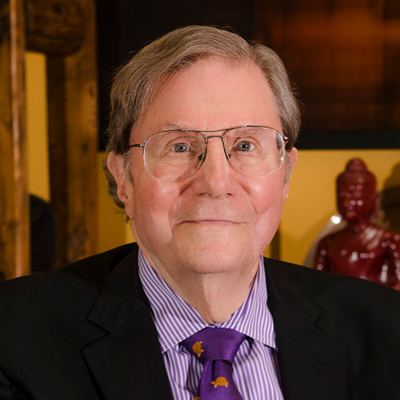
James E. Hughes, Jr., FFI Fellow, writes on family wealth and governance and is the author of Family Wealth: Keeping It in the Family and Family: The Compact Among Generations. He founded a law partnership serving private clients. The James E. Hughes, Jr. Foundation was established in his honor in 2021. He can be reached at contact@JEHJF.org.
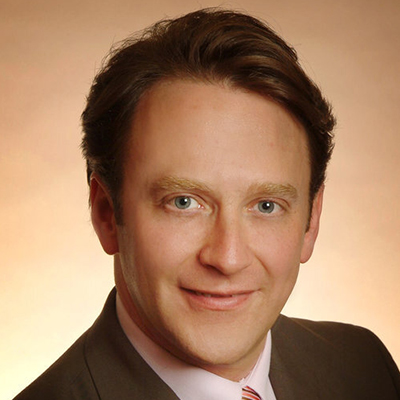
Keith Whitaker, PhD, is the founding director of Wise Counsel Research Foundation. He works as an educator and consultant to leaders and rising generation members of families with significant wealth and serves select families as an independent trustee. He can be reached at keith@wisecounselresearch.com.
View this edition in our enhanced digital edition format with supporting visual insight and information.