View this edition in our enhanced digital edition format with supporting visual insight and information.
What happens when a family’s financial success outpaces its emotional connection? This week’s edition of FFI Practitioner features the sixth article in our 2026 Virtual Study Group series. Wanja Michuki and Joanna Sun of the Asian Circle VSG explore how cultural expectations and intergenerational tensions shape continuity in Asian family enterprises. Through Compassionate Governance in Family Enterprises™, the authors examine how advisors can integrate emotional well-being, shared purpose, and meaningful participation into governance to strengthen an enduring family legacy.
The Dilemma Underlying Asian Wealth Creation
Consider the Chen* family, whose founder built a manufacturing empire from a bicycle repair shop in 1962. Three generations later, they have robust legal structures, professional boards, and well-drafted estate plans. Yet the family is fragmenting. The second-generation son, despite running three successful subsidiaries, has never heard his father express pride in him. The daughter, who restructured their entire investment portfolio, still introduces herself as “the one who isn’t as smart as her brother.” The third-generation members, educated at Wharton and Harvard, feel like strangers in their own family. This is not a governance failure—it’s an emotional systems failure, and it is endemic across Asian family enterprises. The challenge facing Asian family enterprise continuity today is not the creation of financial wealth; it is fostering connection across generations who speak different emotional languages.
The Chens are a typical example of many financially successful Asian families. Over the past 80 years of postcolonial independence in East and Southeast Asia, enterprising families in the region have mastered the art of rapid financial wealth creation to rival centuries-old Western dynasties. Yet, in the absence of emotional connection across three generations, these families will likely face governance conflicts during leadership succession and wealth transfer, putting the continuity of their wealth, masterfully created in one generation, at risk. In extreme cases, family members will resort to legal action, as seen with the Wahaha Group family fallout1 or the 2025 father-son feud in Singapore’s wealthiest family.2
Transformation within these families can occur by creating awareness of the silent and often unconscious emotional processes that lead to family conflict. In this article, we explore family enterprise governance through the lens of Compassionate Governance in Family Enterprises™, a proprietary framework developed to integrate emotional well-being into the governance of family enterprises, particularly those from the postcolonial Global South, where honor and harmony cultures are the norm.3
The Emotional Process Behind Asia’s Time-Compressed Miracle
Most leading Asian family businesses were established in the postcolonial era between the 1940s and 1960s.4 China’s reform and opening from 1978 onward created new economic opportunities that intersected with the existing “bamboo network” of diaspora capitalism across the region. The Asian Tiger economies of Singapore, South Korea, Hong Kong, and Taiwan, which had emerged earlier through rapid industrialization, faced significant restructuring following the 1997 financial crisis. This “compressed growth” presents four distinct waves of wealth creation, resulting in multigenerational emotional signatures observable today:
- Prolonged survival: The postindependence pioneers (1940s–1970s) emerged from colonial shadows. Even after achieving enormous success, many first-generation wealth creators are driven by deeply embedded survival instincts, such as control, secrecy, and scarcity mindsets.
- Parentification: China’s opening and integration (1970s–2000s) brought mainland wealth into the global arena. Second-generation members often describe childhoods spent translating not only language but also entire cultures. “I was seven years old, translating bank documents for my parents,” shared a family member.
- Emotional orphaning: The Asian Tigers era (1980s–1990s) saw manufacturing boom and property fortunes rise. Second and third generations had everything money could buy except their parents’ emotional availability. During a family retreat, a third-generation member said through tears, “I had five tutors but no one to talk to about my first heartbreak.”
- Identity dislocation: Digital transformation wealth (2000s–present) created instant fortunes and pressures. The “sea turtle” returnees, who studied abroad and returned, carried both Western education and Eastern expectations, creating what one client called “standing on a bridge that connects nowhere.”
Deeply embedded Asian cultural norms can intensify emotional distancing within family systems. These dynamics often reflect low differentiation of self and heightened emotional fusion, becoming visible only through systemic pattern observation. They include the following:
Hierarchical authority: Elders commonly retain unilateral decision-making power, limiting the development of agency and self-definition in second- and third-generation members.
Performative filial piety: Compliance and achievement replace authentic emotional contact.
Direct expression of views by the younger generation may be interpreted as disloyalty, reinforcing performance masks as duty.
Face culture: The need to preserve harmony inhibits emotional expression and direct conflict engagement. The facade of stability conceals anxiety, unresolved tension, and triangulation within the family system.
Suffering as love: Parental love is frequently expressed through sacrifice and provision rather than emotional presence. A strong work ethic becomes a moral imperative, sustaining guilt-based attachment and chronic emotional dependence.
A Family Systems Perspective—and Why It Matters
As family enterprise advisors and second-generation members of family enterprises in the postcolonial Global South, we believe we are witnessing the corrosive effects of colonial and postcolonial trauma on multigenerational family systems. In the absence of healthy emotional connection, rising generations can often respond through rivalry, emotional distancing, or cutoff. This underscores the need for systemic interventions alongside technical or purely structural advisory approaches, engaging the family as a whole rather than engaging with the patriarch or dominant coalition as the sole client.
Compassionate Governance in Family Enterprises™: A Transformational Intervention for the Family and Practitioners
Compassionate Governance in Family Enterprises™ uses systemic coaching and somatic interventions to shift entrenched family dynamics and recalibrate the emotional system of the family. By positioning the family as the primary system, corporate governance is enhanced by embedding emotional well-being into strategic decision-making. It becomes compassionate by grounding governance in humanistic, relationally informed practices.
The approach engages iteratively with both family emotional processes and enterprise strategy. Governance principles are applied not only to business decisions but also as reflections of the family’s emotional well-being. By cultivating conscious awareness of these dynamics, the framework creates conditions for durable change and inclusive governance—such as family charters that call for psychological safety alongside fiduciary duty, transparency for all shareholders, or, we would argue, unanimous board resolutions.
Using the Chen family as an illustration, the five interrelated and goal-oriented principles of Compassionate Governance in Family Enterprises™ would be applied as follows:
- Inclusive Design requires transparency and relevant technical education to enable each family member to contribute meaningfully to governance. In the Chen family, the voices of the matriarch, son, daughter, and grandchildren are as important as the patriarch’s and must be encouraged without fear of judgment. For example, the daughter’s role in portfolio restructuring should incorporate input from other family members via the investment policy statement and be properly recognized as a responsible contribution rather than a comparative accomplishment.
- Shared Purpose integrates family roles, responsibilities, and needs for self-actualization into the overarching “why” behind the family’s multidimensional wealth and continuity. Family-generated principles are reflected in investment and distribution policies, aligning the enterprise, the family, and its broader impact. Third-generation members are engaged in ways that reinforce this collective family purpose, demonstrating that honoring the elders and empowering younger generations can coexist.
- Emotional Literacy involves systemic and somatic work that fosters awareness of the emotional processes shaping the family. For instance, coaching each Chen family member to explore and articulate the meaning of family helps redefine belonging across generations, from the patriarch and matriarch to each member of the rising generation.
- Rituals of Connection are facilitated interventions that bring family members together to engage with insights arising from one-on-one coaching. For the Chens, tracing generational patterns—such as the sister’s sense of inferiority relative to her brother and the brother’s sense of inferiority in his father’s shadow—allows for immediate somatic resolution and relational repair.
- Advisory Stewardship provides the container for these processes, enabling inquiry and discovery both individually and collectively. Integrating systemic family advisory and coaching into the Chen family office, including staff participation, ensures that emotional well-being remains central to governance.
The Practitioner’s Evolution
Achieving family transformation requires advisors to evolve alongside the families they serve. Advisors working with Compassionate Governance in Family Enterprises™ are most effective when they:
- Are technically grounded in corporate and family governance and able to work alongside legal, financial, and investment specialists while also bringing systemic, trauma-informed, and process-led coaching capability to engage family members and senior executives directly.
- Work with family members and top managers both individually and collectively, using coaching to support differentiation of self, leadership maturity, and relational accountability across generations.
- Have undertaken their own sustained personal development, enabling them to remain regulated, nonreactive, and adaptive to the evolving emotional and systemic needs of complex family enterprises.
- Understand cultural norms shaped by history and can skillfully navigate the resulting dynamics of hierarchy, identity, loyalty, and financial wealth without reinforcing inherited patterns of silence or overcontrol.
- Are able to hold the advisory role as a stewardship function for the family system, maintaining clear ethical boundaries, protecting intellectual integrity, and prioritizing long-term family continuity over short-term technical optimization.
Asian family enterprises face acute continuity risk. Many next-generation members are unwilling to assume leadership roles due to unresolved intergenerational fractures, even as wealth concentration in the region reaches extraordinary levels. These conditions place a heightened responsibility on advisors. Compassionate Governance in Family Enterprises™ responds by equipping practitioners with the competency to balance emotional healing and technical optimization when helping families build enduring legacies.
*Names changed for privacy.
References
1 Y. Shentu, “Fallen Empire: Wahaha’s Illusions, Lies and Faux Patriotism,” Asia Times, August 26, 2025. https://asiatimes.com/2025/08/fallen-empire-wahahas-illusions-lies-and-faux-patriotism/.
2 D. W. Low, Y. Lee, and B. Toh, “Father-Son Feud Plunges $28.5 Billion Family Empire into Crisis,” The Sydney Morning Herald, February 28, 2025. https://www.smh.com.au/business/companies/father-son-feud-plunges-28-5-billion-family-empire-into-crisis-20250227-p5lfi8.html.
3 The framework of Compassionate Governance in Family Enterprises™ is the intellectual property of Wanja Michuki and Be Bold Consulting & Advisory Ltd. This article reflects a collaborative exploration of its application in Asian family enterprises.
4 Indonesia acquired independence from Dutch rule in 1945; Malaysia acquired independence from Japan in 1945 and from the British Empire in 1957; Singapore acquired independence from the British Empire in 1963 and separated from Malaysia in 1965.
About the Contributors

Wanja Michuki, CFA, CFBA, ACFWA, is managing director of Be Bold Consulting & Advisory Ltd., where she coaches and advises family businesses through generational transitions. She works with family office professionals to develop strategies that strengthen family enterprise stewardship, communication, and structuring during succession.
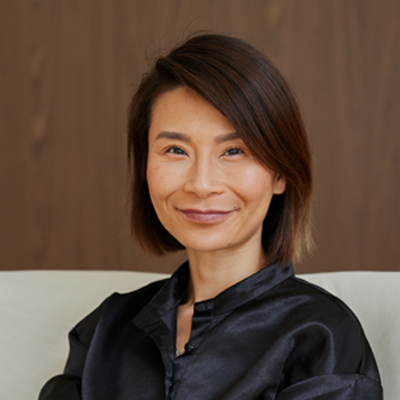
Joanna Sun is cofounder of Emerald Family Enterprise Group. She works with multifamily offices to provide customized educational programs for future owners and successors and develop continuity pathways that support rising generations. She has cross-border experience working with families in mainland China and Asian families that have settled in Australia.
View this edition in our enhanced digital edition format with supporting visual insight and information.