View this edition in our enhanced digital edition format with supporting visual insight and information.
As artificial intelligence reshapes how knowledge is captured and shared, family enterprises face a provocative new question: Can judgment itself be inherited? Drawing on decades of experience advising families and family enterprises, Patricia Annino explores how AI may allow future generations to access digital approximations of founder wisdom long after death. The article examines the opportunities and governance challenges that emerge when continuity, stewardship, and succession intersect with rapidly evolving technology.
For more than forty years, I have sat in rooms where families wrestled with one of humanity’s oldest questions:
What should survive us?
As a trust and estates lawyer and advisor to ultra-high-net-worth families and family enterprises, I have helped families transfer businesses, establish trusts, create family offices, design philanthropic structures, navigate succession, and prepare future generations for stewardship. Along the way, I have learned that inheritance is rarely about money alone.
Families inherit wealth. They inherit values. They inherit authority. They inherit identity.
Yet the most important thing they inherit may be something else entirely: judgment. The ability to recognize opportunity, assess risk, navigate uncertainty, resolve conflict, allocate resources, and make decisions in service of a larger purpose.
Every successful family enterprise eventually confronts the same challenge. The founder who built the business, established the culture, created the wealth, and shaped the family’s future will not always be there.
The next generation must lead. The question is always: How?
For decades, family enterprises have invested enormous effort in trying to preserve founder wisdom. They create family constitutions, family councils, boards, trusts, leadership-development programs, shareholder agreements, mission statements, governance systems, and educational initiatives. All seek to answer the same question:
How do we preserve what matters most without preventing future generations from becoming leaders in their own right?
Artificial intelligence may change that equation.
For most of human history, death created a boundary. The dead could leave assets. The dead could leave instructions. The dead could leave institutions. But the dead could not continue participating in decisions. That assumption may no longer hold.
Imagine the founder of a multigenerational family enterprise. Over a lifetime, the founder leaves behind thousands of emails, speeches, interviews, board discussions, strategic plans, letters, family meeting recordings, and philanthropic decisions.
Today, much of that wisdom gradually disappears. Tomorrow, it may not.
Artificial intelligence makes it conceivable that future generations could interact with a digital system trained on decades of the founder’s communications, values, and decision-making patterns.
The founder dies. The influence remains.
Future family members will ask critical questions: Should we sell the company? Should we enter a new market? Should we take on debt? Should we remain family-owned?
The system will respond—not because the founder is alive, but because technology has preserved an approximation of how the founder thought.
Many family enterprises will find this possibility compelling. After all, most families lose far more than wealth when a founder dies. They lose context. They lose stories. They lose judgment. They lose the accumulated pattern recognition that often cannot be captured in legal documents or governance structures.
Artificial intelligence may offer a way to preserve some portion of that inheritance. Of course, the implications extend beyond the operating business.
Imagine a family foundation consulting an AI model trained on decades of donor decisions.
The question is: “What causes would grandmother have funded?”
The system answers.
Imagine a family office drawing upon an AI trained on the investment decisions of a first-generation entrepreneur whose instincts created extraordinary wealth.
The question is: “How would he have evaluated this opportunity?”
The system answers.
Imagine future trustees consulting an AI trained on decades of fiduciary decisions made by a respected predecessor who deeply understood the family, its history, and its recurring challenges.
The system answers.
In each case, the technology promises continuity. Yet continuity has always carried a corresponding risk. For centuries, succession required that one generation eventually stop deciding so that another generation could learn how to decide. Artificial intelligence may challenge that transition.
At what point does preserving wisdom become preserving control? At what point does guidance become governance? At what point does continuity become constraint? Will this also lead to increased litigation?
Suppose the AI becomes very persuasive. What if an elderly parent develops a close relationship with an AI companion and changes an estate plan based on the dialogue? Does relying on the advice of AI create undue influence? Is AI capable of exerting undue influence? Is there liability attached to that? If so, who would be responsible?
The family enterprise field has long recognized the dangers of founder shadow. Families often struggle when a founder’s influence remains so dominant that future generations hesitate to develop their own judgment. Artificial intelligence introduces a fascinating possibility. Founder shadow may become founder presence.
Imagine a fourth-generation family council meeting twenty years from now. A difficult issue arises. Someone asks, “What would grandmother have done?” For most of history, the family would discuss, debate, and ultimately exercise its own judgment. Now imagine someone turns to the family’s AI model.
The system answers.
The room falls silent.
The important question is no longer whether the answer is accurate. The important question is whether anyone feels free to disagree. That is not a technology problem. It is a governance problem. It is a stewardship problem. It is an inheritance problem.
Throughout my career, I have watched inheritance systems evolve as society has changed its understanding of family, identity, authority, and human dignity. Children born outside marriage, adopted children, same-sex couples, and individuals living with mental illness have all experienced profound changes in how the law recognizes their place within families and society. The law adapted because society’s understanding of human relationships evolved.
Artificial intelligence presents a different challenge, but one that is equally fundamental. For the first time, we may be approaching a world in which a person’s accumulated judgment can continue influencing decisions long after biological death. Whether that possibility strengthens families or weakens them will depend on how wisely we use it.
Historically, families have sought to transmit four things across generations: wealth, values, authority, and identity. Artificial intelligence may introduce a fifth inheritance: judgment.
The challenge for families and family enterprises will not be preserving it. The challenge will be ensuring that the wisdom of one generation informs the next without preventing the next generation from becoming wise itself. Because the ultimate purpose of inheritance has never been to preserve the past. It has been to prepare for the future.
About the Contributor
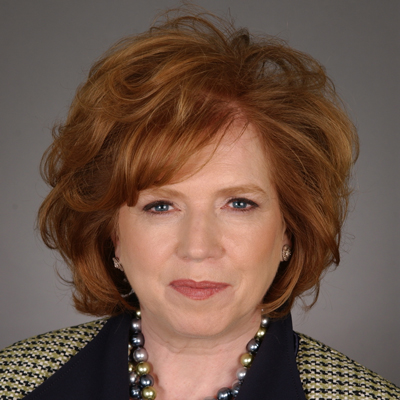
Patricia Annino is a partner in Rimon’s Trust and Estates Group in Boston. She has more than 30 years of experience serving the diverse needs of families, individuals, and owners of closely-held businesses. She is an FFI Fellow, recipient of the Richard Beckhard Practice Award, founding member of the FFI 2086 Society, and member of the FFI Board of Directors. She can be reached at patricia.annino@rimonlaw.com.
View this edition in our enhanced digital edition format with supporting visual insight and information.