
View this edition in our enhanced digital edition format with supporting visual insight and information.
Succession in family enterprises is rarely just a legal or financial event—it is a test of leadership readiness, legitimacy, and continuity. Increasingly, research suggests that philanthropy can play a meaningful role in meeting these challenges.
In this article, Matthew F. Erskine examines how strategic charitable giving supports family business succession, drawing on global research and insights from Joshua E. Chadajo, CEO of JEC Philanthropy. This article highlights how philanthropy can strengthen governance capabilities, foster intergenerational cohesion, and help successors build credibility with key stakeholders during periods of transition.
When families prepare for business succession, they typically focus on legal structures, tax planning, and governance frameworks. Yet an often-overlooked strategic tool sits at the intersection of these concerns: philanthropy. Recent research and practitioner insights reveal that charitable giving during succession is far more than a tax strategy—it serves as a rehearsal space for leadership, a builder of legitimacy, and a unifying force across generations.
The Strategic Role of Philanthropy in Succession
Family businesses face unique challenges during leadership transitions. Successors, particularly younger or less experienced ones, must establish legitimacy with stakeholders, including employees, customers, suppliers, and the broader community. Recent studies across multiple countries consistently show that family firms strategically increase philanthropic activities during succession periods, with this pattern strongest when successors are inexperienced or when ownership concentration is high.
“The single most important way philanthropy supports succession is by creating a shared governance experience before the business transition occurs,” explains Joshua E. Chadajo, founder and CEO of JEC Philanthropy. “When next-generation members participate in grant-making decisions, review impact reports, and engage with community partners, they’re building decision-making skills, stakeholder relations, and public credibility in a lower-stakes environment than the family business itself.”
This perspective aligns with research demonstrating that philanthropy helps families accumulate what scholars call “socioemotional wealth,” the nonfinancial aspects of family business ownership, including reputation, identity, and emotional attachment. During succession, philanthropy serves multiple strategic functions simultaneously: it builds the successor’s public profile, maintains stakeholder relationships, transmits family values, and provides evidence of continued family commitment to the community.
Building Legitimacy Through Strategic Giving
The challenge of legitimacy is particularly acute during succession. Studies show that family firms deliberately use philanthropy to enhance public image and gain stakeholder acceptance, especially when successors lack the track record of the outgoing generation. This strategic deployment of charitable giving addresses both internal legitimacy (within the family and organization) and external legitimacy (with customers, suppliers, and the community).
Research indicates that the timing and intensity of philanthropic activity often correlate with succession milestones. “Families often increase giving during leadership transitions because it signals stability and continuity to stakeholders,” Chadajo notes. “When a family announces both a succession plan and a major charitable initiative simultaneously, it sends a powerful message: ‘This family remains committed to its values and to this community, regardless of who’s leading the business.’”
However, Chadajo cautions against purely performative philanthropy: “One red flag that philanthropy is being used only for optics is when charitable activities increase dramatically during succession but are not accompanied by any meaningful engagement from the successor. If the next-gen leader’s name appears on press releases but they’re not attending site visits, meeting with nonprofit partners, or genuinely seeking to understand the impact of the giving, stakeholders may perceive publicity to be the primary reason for giving.”
The Family Unity Factor
Beyond external stakeholder management, philanthropy serves a critical internal function: building cohesion across generations. Multiple studies emphasize how involving younger family members in charitable decision-making helps instill family values, foster unity, and prepare heirs for stewardship responsibilities.
“The quickest way philanthropy builds unity across generations is through shared decision-making with real stakes,” Chadajo observes. “When family members from different generations must agree on which causes to support and how much to give, they’re forced to articulate their values, listen to differing perspectives, and reach consensus. These are precisely the skills they’ll need for business governance decisions later.”
This governance-training function is particularly valuable because philanthropic decisions, while significant, typically carry lower risk than business decisions. A grant-making mistake in a donor-advised fund or family foundation rarely threatens the core business, yet it provides authentic learning experiences in analysis, deliberation, and accountability.
Research confirms that family ownership level intensifies philanthropic motivation during succession. Families with higher ownership stakes show stronger correlations between succession planning and charitable giving, suggesting that controlling families view philanthropy as integral to preserving their legacy and identity across generations.
Practical Implementation: Governance and Structure
When should families formalize their giving through structures such as donor-advised funds or private foundations? Chadajo’s guidance is pragmatic: “Families should formalize giving when informal approaches create confusion about decision-making authority or the decisions themselves, when they want to involve multiple generations systematically, or when the scale of giving justifies the administrative structure. For families in early succession planning, a DAF often provides the right balance: professional administration, tax efficiency, and the ability to involve next-generation members in advisory roles without the complexity of foundation governance.”
Research on governance effectiveness during succession emphasizes several factors: clarity of roles, systematic involvement of rising generations, and alignment between philanthropic and business governance structures. “The governance feature that matters most during succession is defined decision-making authority combined with meaningful next-gen participation,” Chadajo notes. “Families often err by making philanthropy either too rigid—where younger members feel like rubber stamps—or too vague, where no one knows who actually decides anything.”
The case for simplicity versus structure depends on family circumstances. “Families are generally better served by simplicity early in succession planning, with structure following as the next generation demonstrates commitment and capability and as the overall level of giving increases,” Chadajo advises. “Start with a DAF where younger members serve on a grant advisory committee. If they demonstrate serious engagement over several years, consider whether a more formal foundation structure might better serve long-term governance goals.”
The Planning Connection
For business-owning families, charitable giving intersects significantly with succession planning, particularly around liquidity events. “DAFs are particularly effective for business-owning families because they allow separation of timing—the tax deduction happens when funds are contributed, but grant recommendations can occur over time as the family clarifies its priorities,” Chadajo explains. “This is especially valuable during succession, when families may be uncertain about the incoming generation’s range of philanthropic interests.”
Pre-sale planning represents a critical opportunity. “DAFs can support pre-sale or liquidity-event planning by allowing families to contribute appreciated business interests before a sale, potentially capturing the charitable deduction at full fair market value while potentially avoiding capital gains tax on the appreciation, subject to applicable tax laws and regulations,” Chadajo notes. “But the succession benefit extends beyond taxes: when a successor sees the outgoing generation make a major charitable commitment before or during a sale, it demonstrates that the family’s wealth carries responsibility, not just opportunity.”
The biggest misconception? “Many families believe DAFs are purely year-end tax vehicles with no governance value,” Chadajo observes. “In reality, DAFs can serve as excellent year-round succession tools precisely because they combine tax efficiency with accessible governance structures. Unlike foundations, DAFs don’t require filing Form 990 or establishing formal boards, yet they can still provide meaningful next-gen involvement through advisory committees.”
Context Matters: Moderating Factors
Research reveals that philanthropy’s effectiveness as a succession tool varies by context. Social status and religiosity influence the relationship between succession planning and charitable giving, with high social status strengthening the connection while religiosity appears to weaken it, suggesting that families embedded in religious communities may have alternative mechanisms for legitimacy and values transmission.
Cultural context also shapes outcomes. Studies in regions with strong clan cultures show weaker effects of philanthropy on succession success, possibly because these cultures provide alternative social capital and legitimacy mechanisms. Conversely, families in industries facing environmental scrutiny show stronger correlations between succession, philanthropy, and stakeholder acceptance.
These findings suggest that families should calibrate their philanthropic approach to their specific context. “Families in industries under public scrutiny—manufacturing, real estate development, resource extraction—often find that strategic philanthropy plays an outsized role in maintaining their social license to operate during succession,” Chadajo notes. “The community needs assurance that the next generation will be equally responsible stewards.”
Measuring Success Beyond Dollars
How can families know whether philanthropy is strengthening rather than distracting from succession? “The best indicator is whether philanthropic engagement improves the successor’s stakeholder relationships and decision-making capabilities,” Chadajo suggests. “Are community leaders increasingly comfortable with the next-gen leader? Are employees more confident in the family’s continued commitment? Is the successor demonstrating better strategic thinking through their philanthropic governance role?”
Research on post-succession performance supports this focus on capability building. Studies show that when philanthropy during succession includes substantive next-generation involvement and aligns with sustainable HR practices, firms demonstrate better post-succession outcomes, including improved stakeholder relations and organizational performance.
“Families should measure both quantitative and qualitative outcomes,” Chadajo advises. “Quantitatively: donation amounts, participation rates across generations, and number of community partnerships. Qualitatively: family alignment around values, the successor’s reputation trajectory, and stakeholder confidence in continuity. The qualitative measures often matter more for succession success.”
One question every family should ask before making a major year-end gift? “Does this giving decision reflect genuine family consensus on values and priorities, or is it driven primarily by tax deadlines?” Chadajo suggests. “The most effective succession-supporting philanthropy emerges from authentic family conversations about purpose and legacy, not from reactive December tax planning.”
When Philanthropy Complicates Succession
While research emphasizes philanthropy’s benefits, practitioners recognize potential complications. “Philanthropy can complicate succession when family members use charitable disagreements as proxies for deeper business or relationship conflicts,” Chadajo cautions. “If siblings can’t agree on which nonprofits to support, that may signal unresolved issues about business direction, governance authority, or family dynamics that need direct attention.”
Another risk is overreliance on philanthropic reputation as a shield against business performance issues. “When families emphasize their charitable giving while avoiding substantive discussions about business strategy, operations, or governance challenges, philanthropy becomes a distraction rather than a strategic tool,” Chadajo notes. Research on legitimacy building confirms this risk—philanthropy complements but cannot substitute for operational excellence and good governance.
Common Mistakes to Avoid
What mistakes do families frequently make when involving next-generation members in philanthropy? “The most common mistake is tokenism—putting next-gen names on foundation letterhead or including them in photo opportunities without giving them genuine input and decision-making authority, or requiring them to develop a certain level of expertise in the causes being supported,” Chadajo explains. “This teaches the wrong lesson: that philanthropy is about appearance rather than impact, and that governance is about titles rather than responsibility.”
A related error involves funding decisions without sufficient preparation. “Families sometimes thrust next-gen members into grant-making roles without providing them context on the family’s philanthropic history, the community needs being addressed, or the basics of evaluating nonprofit effectiveness. Omitting an understanding of the family’s underlying why sets them up for frustration and poor decisions.”
Finally, families often fail to connect philanthropic governance to business governance. “When philanthropic decision-making processes are completely disconnected from business governance practices, families lose the rehearsal-space benefit,” Chadajo notes. “If the foundation allows unstructured emotional decision-making while the business demands rigorous analysis, next-gen members aren’t actually preparing for business leadership.”
The Path Forward: Integration and Intentionality
Examining the research evidence alongside practitioner insights reveals a clear picture. Families that successfully leverage philanthropy in succession planning share several characteristics: they view charitable giving as integral to family identity rather than separate from business operations; they involve rising generations authentically rather than symbolically; they align philanthropic governance with business governance principles; and they measure success through relationship quality and capability development, not just donation amounts.
“The families who gain the most from philanthropic planning are those who treat giving not merely as a tax strategy but as a platform for governance, continuity, and identity,” Chadajo reflects. “Philanthropy becomes a rehearsal space for succession—one that reveals values, builds cohesion, and strengthens the successor’s public standing long before the leadership transition formally occurs.”
Research confirms this integration imperative. Studies across multiple countries and contexts demonstrate that philanthropy’s succession benefits are strongest when charitable activities involve substantive family engagement, align with long-term strategic objectives, and demonstrate continuity of family commitment to stakeholder relationships.
For advisers working with business-owning families, these findings suggest several implications. First, succession planning conversations should explicitly address philanthropy’s strategic role, not relegate it to year-end tax discussions. Second, families benefit from viewing philanthropic structures—DAFs, foundations, charitable trusts—as governance training vehicles, not just tax-planning tools. Third, successor development plans should incorporate philanthropic leadership opportunities as preparation for business leadership roles.
Action Steps for Families and Advisers
For families currently engaged in succession planning or preparation, several concrete steps can enhance philanthropy’s strategic value:
- Clarify objectives: Document whether philanthropic goals include successor development, stakeholder relationship management, family unity, tax efficiency, or some combination. Ensure alignment across generations on these priorities.
- Create governance experiences: Establish philanthropic decision-making structures that mirror business governance principles. If the business uses committees, data-driven analysis, and formal approval processes, replicate these in philanthropic governance.
- Involve rising generations authentically: Move beyond symbolic inclusion to give next-gen members genuine decision-making authority with appropriate oversight and mentorship. Require them to develop expertise in the causes being supported.
- Integrate with business planning: Coordinate philanthropic giving with business succession milestones, liquidity events, estate planning, and stakeholder communication strategies. View philanthropy as part of the comprehensive succession plan, not a separate activity.
- Measure what matters: Track both quantitative metrics (participation rates, donation amounts, community partnerships) and qualitative outcomes (successor reputation, stakeholder confidence, family alignment). Prioritize measures that reflect succession readiness.
- Address conflicts directly: When philanthropic disagreements emerge, examine whether they signal deeper business or family issues. Use professional facilitation if needed to address root causes rather than allowing charitable conflicts to fester.
- Document the story: Capture the family’s philanthropic history, values, and decision-making rationale to provide context for future generations. Include both successes and learning experiences.
Conclusion
The evidence is clear: philanthropy plays a significant strategic role in family business succession, particularly when families approach charitable giving with intentionality, integrate it with governance development, and involve rising generations authentically. Research across multiple contexts demonstrates that strategic philanthropy during succession periods helps build legitimacy, maintain stakeholder relationships, transmit values, and prepare successors for leadership responsibilities.
As families prepare for year-end giving and advance succession plans, they should consider philanthropy through this broader lens. The question is not merely “How much should we give?” or “What are the tax benefits?” but rather “How can our charitable activities strengthen leadership transition, build family cohesion, and demonstrate continued commitment to our stakeholders?”
For many families, the answer involves viewing philanthropic structures—whether donor-advised funds, private foundations, or other vehicles—as governance laboratories where rising leaders can develop capabilities, build reputations, and practice stewardship in an environment that balances meaningful stakes with manageable risks.
The families that successfully navigate this terrain treat philanthropy neither as an afterthought nor as a purely financial maneuver, but as an integral dimension of succession strategy—one that reveals character, builds bridges, and prepares the next generation for the complex responsibilities of family business leadership.
References
He, W., & Yu, X. (2019). Paving the Way for Children: Family Firm Succession and Corporate Philanthropy in China. Journal of Business Finance & Accounting, 46(9-10), 1154-1184.
Hunjra, A., Hashim, H., Alahdal, W., & Mehmood, R. (2025). The relationship between family ownership, governance structure and corporate philanthropy. Journal of Asia Business Studies.
Li, W., Au, K., He, A., & Song, L. (2015). Why Do Family-controlled Firms Donate to Charity? The Role of Intrafamily Succession Intention, Social Status, and Religiosity. Management and Organization Review, 11(4), 621-644.
Likai, Z., Lihong, S., & Qiang, L. (2020). Acquired Philanthropist: Research on Charitable Donation of Family Business in the Context of Succession. Management World, 42, 118-135.
Mao, X., & Cheng, B. (2024). Family firm succession and corporate philanthropy: evidence based on internal legitimacy and external relationship-specific assets. Applied Economics.
Pan, Y., Weng, R., Xu, N., & Chan, K. (2018). The role of corporate philanthropy in family firm succession: A social outreach perspective. Journal of Banking and Finance, 88, 423-441.
Sklair, J. (2018). Closeness and critique among Brazilian philanthropists. Focaal, 2018(81), 26-39.
Sklair, J., & Glucksberg, L. (2020). Philanthrocapitalism as wealth management strategy: Philanthropy, inheritance and succession planning among the global elite. The Sociological Review, 69(2), 314-329.
Su, Y., Xia, J., Zahra, S., & Ding, J. (2022). Family CEO successor and firm performance: The moderating role of sustainable HRM practices and corporate philanthropy. Human Resource Management, 61(6), 679-698.
Zhang, L., Lin, Z., Huang, W., Djafarova, E., & Ren, L. (2024). Intergenerational succession and corporate philanthropy: a stakeholder perspective. International Journal of Entrepreneurial Behavior & Research, 30(5), 1242-1267.
About the Contributors
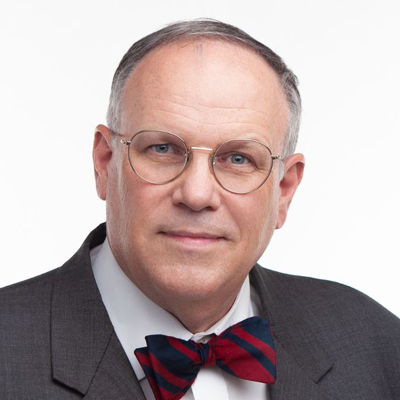
Matthew Erskine, FFI Fellow, is the managing partner of Erskine & Erskine LLC, a fourth-generation law firm, and The Erskine Company, LLC, a consulting firm. He focuses on strategic planning and legal services for business owners, professionals, individuals, families, collectors, and inheritors of unique assets.

Joshua E. Chadajo is founder and CEO of JEC Philanthropy, where he advises high-net-worth individuals on meaningful, intentional and joyful giving and business-owning families on strategic charitable giving, governance structures, and wealth planning integration. His practice includes helping families leverage philanthropy to strengthen succession planning, build family cohesion, and create lasting community impact.
View this edition in our enhanced digital edition format with supporting visual insight and information.