



The Role of Risk Management in a Family Enterprise
This week, we are pleased to share an article by Bilal Zein examining the topic of risk management in family enterprises.

Interdependent Wealth: How family systems theory illuminates successful intergenerational wealth transitions
Thanks to this week’s contributor, Steve Legler, for highlighting key concepts in his recently released book, Interdependent Wealth: How Family Systems Theory Illuminates Successful Intergenerational Wealth Transitions, on relationships between family wealth and family systems theory.

Cases for Clients
In this week’s edition, we are pleased to feature a selection of family business cases published in FFI Practitioner earlier this year. These cases can serve as effective tools to incorporate in consulting and educational work with clients and further the FFI Practitioner mission to provide readers with practical materials that support their work with multi-generational family enterprises.

Congratulations to the 2019 Award Recipients
FFI has always been about excellence, fostering academic research, encouraging best practices, and inspiring professionals for more than 30 years. Each year FFI honors excellence in the field by granting academic, achievement and FBR awards.
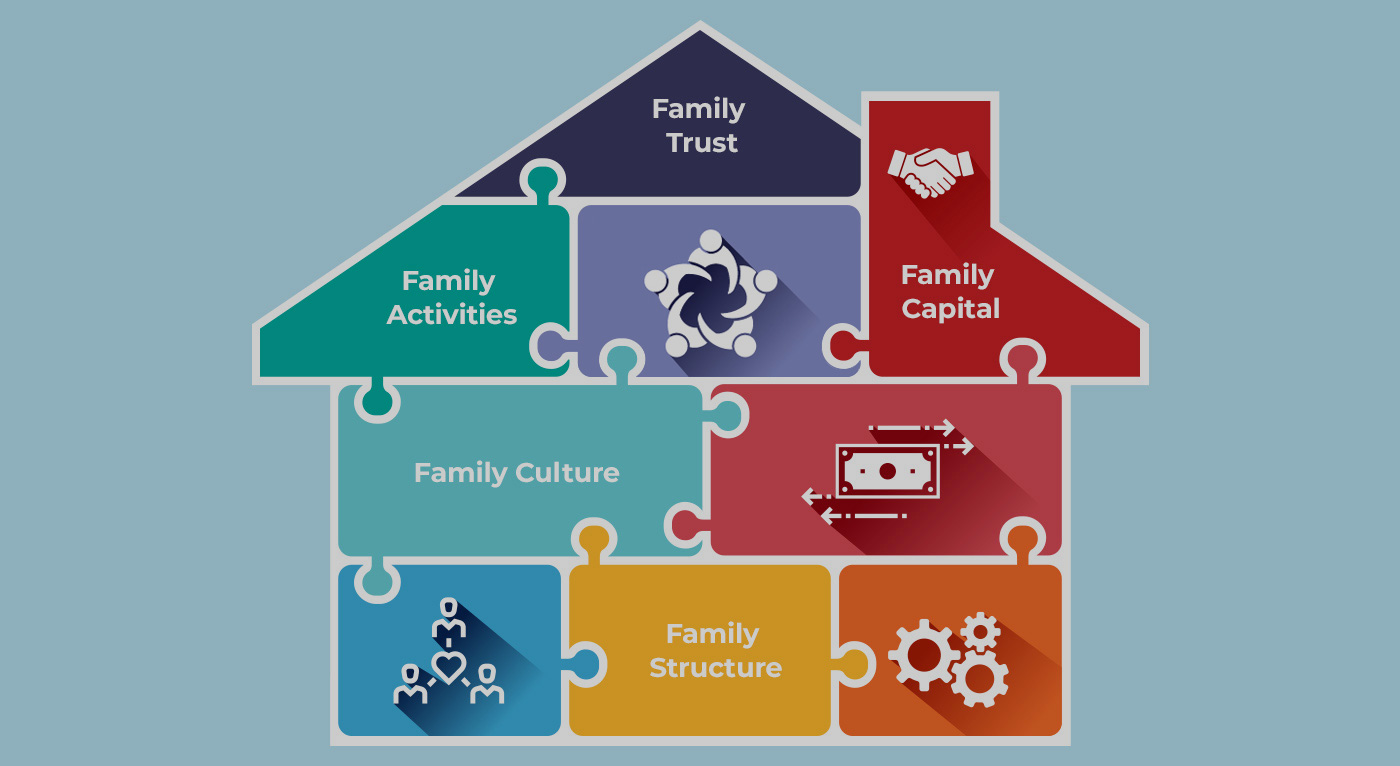
Creating, Preserving, and Transferring Family Capital: The keys to family business success
Thank you to this week’s contributor, Gibb Dyer, for sharing insights he’s acquired during his thirty-five years as a family business consultant. We hope you enjoy this week’s FFI Practitioner in which the authors identifies five factors that assist family enterprises to grow and transfer their family capital to the next generation.

Launching the Parallel Planning Process: Aligning family and business systems
Thank you to this week’s contributors, Randel Carlock and Keng-Fun Loh, for this examination of the enhanced Parallel Planning Process (PPP), a tool that can help advisors to professionalize the family and business planning process.

Challenges that Asian Families Face in Developing a Full-service Family Office
This week’s FFI Practitioner edition continues our series of articles written by members of the Editorial Committee. Thank you to Paul Chung, Jeremy Cheng, and Chin Chin Koh for this article examining the challenges confronting Asian families interested in establishing a single family office as well as practical advice for advisors navigating these family office challenges around the world.

Practice, Practice, Practice: Musings on being a “Practitioner”
Thank you to this week’s contributor, Patricia Angus, who continues our series of FFI Practitioner articles written by members of the Editorial Committee. In this edition, Patricia examines what it truly means to be a “Practitioner” and the impact of ongoing practice when working with family enterprise clients.

Utilizing Social Media in Family Enterprises
Today’s edition kicks off a series of FFI Practitioner articles by members of the Editorial Committee.

Most Popular Articles from the First Half of 2019
We hope you’ve been enjoying the FFI Practitioner articles, interviews, cases, and research published on a diverse set of topics during the first half of 2019. In this week’s edition, we’re pleased to count down the Top 10 Most Popular editions from the first half of the year!

Behavioural Risk in Family Business: Some thoughts on individual stories
This week’s FFI Practitioner dives into risky individual behavior within the family enterprise which, if ignored, can impact the performance of the business and the unity of the family. Thank you to Elizabeth Bagger, director general of the Institute for Family Business, for her examination of the topic and explaining how helping individuals become aware of this behavior can transform their story into their greatest asset.

Using Modeling to Diagnose Risks to Succession
Thank you to this week’s contributor, Matthew Erskine, for providing this thoughtful examination of the “Success to the Successful” model and applying to succession in family enterprises.

Is Traditional Successor Induction Still Relevant for Family Firms?
Is the traditional method of family business leadership succession, where the successor joins the business at a young age and gradually learns the values and business knowledge from the senior generation, still the best approach? In this week’s FFI Practitioner, contributors Zografia Bika, Peter Rosa, and Fahri Karakas examine this question through a study of a multi-generational Scottish construction company and share actionable insights for advisors helping clients with succession planning.

Financial Independence – A Critical Factor in Ownership and Management Succession
Thank you to this week’s contributor, Randy Waesche, for this thought-provoking examination of the influence that money and financial independence can have in the succession process.

Study Finds Children of Millionaires Want to be Stewards of Wealth
Thanks to this week’s author, Natalie McVeigh, for summarizing a recent US-based study on children (ages 16-26) of millionaires, presenting key points that could be useful to advisors, their clients, and researchers globally.

Letting Go – Five Basics
CEO succession to a non-family executive is particularly challenging to a CEO who is a family member.

Research Applied: FBR Précis for FFI Practitioner
What organizational configurations lead to the highest levels of innovation in family firms? In this week’s edition, which is a précis of “A Configurational Approach to Family Firm Innovation,” an article appearing in the June 2019 issue of FBR, Navneet Bhatnagar explores this question and its implications for family enterprise advisors.

Three Communication Skills for Breaking Through Impenetrable Barriers
How can family advisors help their clients when they are so enmeshed in conflict that they seem to have erected impenetrable barriers? According to this week’s contributors, Mitzi Perdue and Amy Castoro, advisors can utilize three communication techniques to break down these barriers and address the underlying causes of the conflict. Mitzi and Amy have illustrated these techniques with an instructive case study that can be shared with clients.

Solution-Focused Brief Therapy: A communication model for family business interventions (Part 2)
This week’s FFI Practitioner concludes a two-part examination of Solution-Focused Brief Therapy (SFBT), by Brett Coffman. In this week’s edition, Brett addresses the need to look for change in clients and provides a mnemonic device to help remind practitioners about the various techniques associated with SFBT.

Solution-Focused Brief Therapy: A communication model for family business interventions (Part 1)
This week’s FFI Practitioner begins a two-part examination of Solution-Focused Brief Therapy (SFBT), an evidence-based coaching and therapy model, and its potential application to help family enterprise members find solutions to a variety of challenges. Thanks to this week’s contributor, Brett Coffman for providing this analysis.